Your First Small-Batch Bag Order: From Sample to Reorder for Boutiques
A boutique's first bag order is a test, not a commitment. It should tell you whether a seller is reliable, whether the style fits your customers, whether QC and packing work and whether your landed-cost assumptions hold. 1688 Bags builds its service around this kind of small-batch buyer. This guide combines its boutique workflow with its sample-to-reorder guidance into one practical plan.
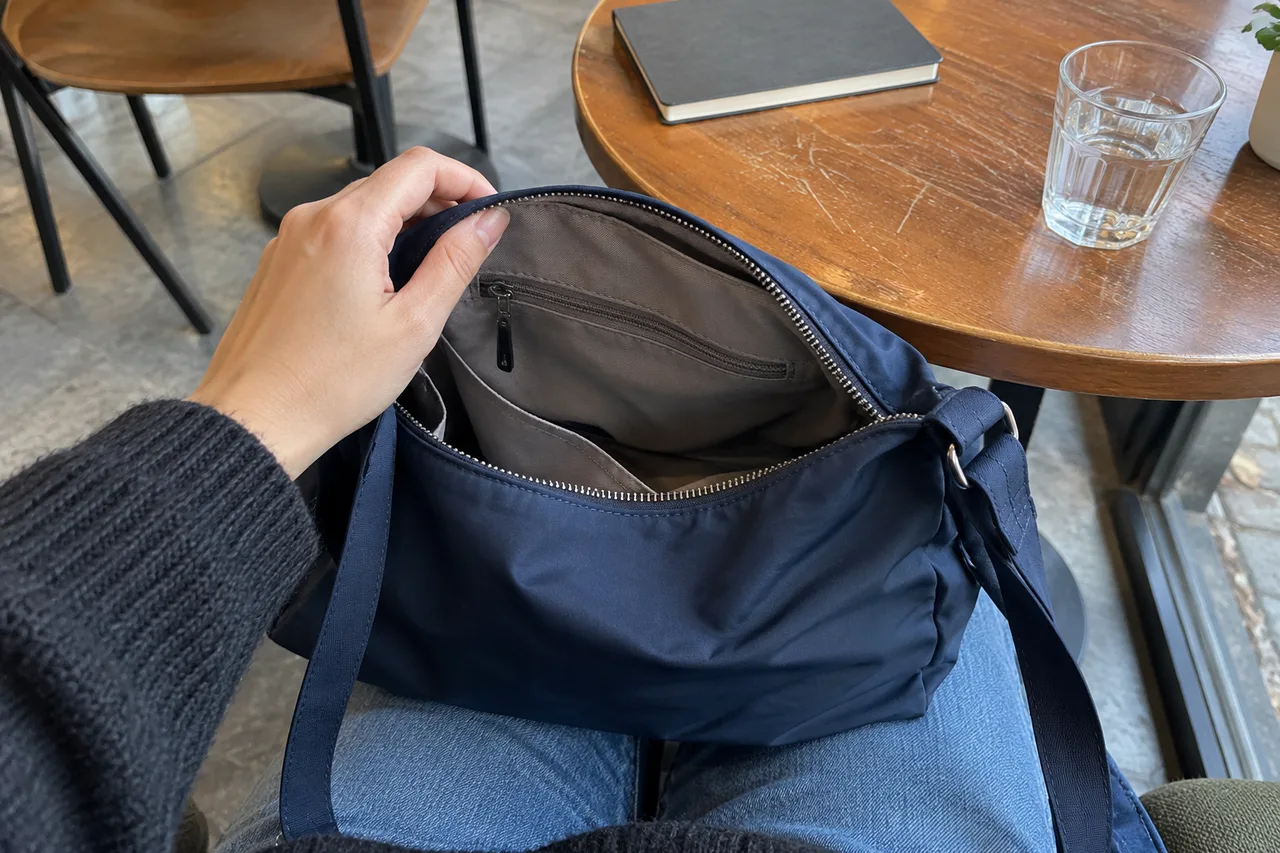
AI-generated illustration of a hand opening a navy shoulder bag to check its lining, representing a sample review. Image: 1688bags.com.
Who the small-batch route is for
The site's small-batch bag sourcing guide lists boutiques, concept stores, reseller brands, pop-up shops, creator stores and event buyers. A typical first test is 2 to 100 pieces, depending on seller MOQ, category, color split and delivery route. The core decision is to validate the seller, product fit, QC photos, packing and delivered value before restocking. Its scaling rule is equally useful: move from marketplace testing to OEM only after demand, dimensions, quality level and repeat need are clear.
The five-step plan
Steps 1 and 2: write a brief, then shortlist sellers
Before contacting anyone, write down what you want in a form a seller can answer. The site's boutique bag sourcing brief template and its general guidance suggest including links or reference photos, style direction, quantity, color split, destination, target landed cost and QC concerns. For each candidate, check silhouette, size, material, color, hardware and whether it matches your customer.
Next, shortlist sellers. For each one, the site reviews store focus, response speed, exact variant support, MOQ and restock likelihood. That last point matters for a boutique: a seller who cannot restock makes a successful test hard to repeat. Keep seller claims separate from evidence, and record any question the seller has not answered as pending. The 1688 bag MOQ guide explains how to check whether minimums apply per style, per color or to the whole order.

Seller comparison dashboard used to shortlist bag sellers for a first small order. Image: 1688bags.com.
Step 3: use a sample as a documented reference
A sample is valuable only if you record what you accepted. The sample to first small order guide recommends treating an accepted sample as a reference to document, not a guarantee that the next batch will match. Its practical advice:
- One sample per material and color combination. If a 30-unit order has two colors, a single black sample leaves the other color unverified. Get a sample of the second color or keep it on hold.
- Save the evidence. Keep the seller link, the selected SKU screenshot, the sample receipt date and your own observations. Photograph the front, back, lining, handle attachments, closure and anything your customers care about, and use a ruler for dimensions.
- Separate observation from claim. A sample shows appearance, assembly and basic function. A photo review does not prove fiber composition, long-term durability or legal compliance.
Step 4: place the first order with clear acceptance rules
When you move from sample to order, ask whether the batch uses the same material, hardware finish, lining, dimensions and packing as the reference. Availability can change after a sample, so request a fresh stock and specification confirmation and forbid automatic color or hardware substitutions. Agree the inspection coverage, required photos and response path before purchase, and identify unacceptable defects and who can approve alternatives. If the QC result differs from the reference, hold export while the options are reviewed; the what happens if QC fails page lists them.
Then check the numbers. The bag sourcing pricing page breaks the quote into source subtotal, buying service, QC and repacking, DDP route and a planning buffer, and it reminds buyers that an unknown amount is not zero. The case examples page shows how the site thinks about different order types.
Step 5: review the batch and decide what comes next
When the first order arrives, compare it with the acceptance record, including counts and color split, and record any approved differences explicitly. Keep the inspected sample and the batch evidence for the next reorder rather than relying on an old listing page.
From there you have three paths. If the style sold and the seller was reliable, reorder with the same documented specification. If the style sold but the seller was weak, look for another listing with the same reference. If demand is clear and you need your own dimensions, materials or branding, that is the point the site suggests considering OEM production. 1688 Bags itself is a marketplace-agent workflow, and its contact page directs drawings, private-label artwork, tooling and production quotes to a separate factory RFQ route rather than handling them as marketplace buys.
Common first-order mistakes
A few mistakes come up again and again with first small orders. Buyers split a modest quantity across too many styles and colors, and then find that seller minimums do not allow it. They approve a batch on the strength of one sample in one color. They compare listing prices rather than landed costs, and are surprised by China delivery, QC or packing charges. And they forget to record what they accepted, so the reorder starts from scratch. Each of these is avoidable with the brief, the sample record and the acceptance rules described above, which is the real value of treating the first order as a structured test.
FAQ
How many pieces should a first boutique order be?
The site describes a typical first test as 2 to 100 pieces, depending on seller MOQ, category, color split and delivery route.
Does an approved sample guarantee the batch will match?
No. Confirm the current batch specification and inspect against the recorded reference.
Can 1688 Bags make bags with my own logo?
Its marketplace service does not cover private-label production; buyers with artwork or tech packs are pointed to a separate OEM/ODM factory route.
Ready to plan a first test? Send your brief through the sourcing request page.
Contact 1688 Bags: email sales@1688bags.com · 1688bags.com